Condensed NBA Schedules Fuel Defensive Fatigue Patterns in Totals Markets
Written by Alex Walter · Jun 18, 2026
Condensed NBA Schedules Fuel Defensive Fatigue Patterns in Totals Markets
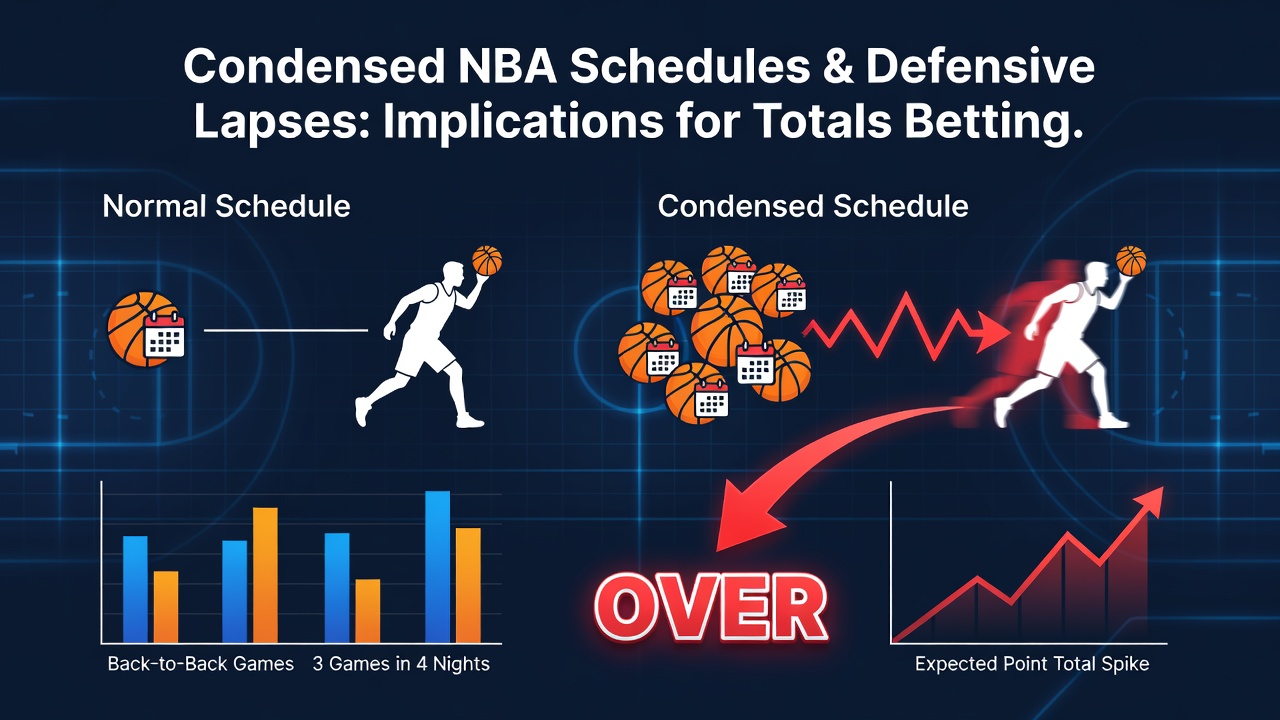
Condensed NBA schedules pack multiple games into short windows with limited recovery time, and data from the 2025-26 regular season shows these stretches correlate with measurable drops in defensive efficiency. Teams playing on zero or one day of rest allow higher field goal percentages at the rim while committing more fouls per possession according to league tracking metrics. Bettors tracking totals markets have observed corresponding rises in combined scoring outputs during these periods since the league expanded its in-season tournament format and added back-to-back requirements around the holidays.
Schedule Compression Patterns Through the 2025-26 Campaign
The NBA calendar for 2025-26 included clusters of four games in five nights for several Eastern Conference clubs during December and January, followed by similar blocks in March before the playoffs began. Travel across time zones compounds the issue when Western Conference teams face three-game road swings within a week, and league-wide rest data indicates average minutes per player remain elevated even on the second night of back-to-backs. Researchers tracking player tracking data from Second Spectrum noted that sprint distance and defensive closeout speed decline by measurable margins after the third consecutive game in six days.
June 2026 marked the conclusion of the postseason, yet the effects of earlier schedule density lingered into the Finals where both participating teams had navigated compressed Western Conference playoff rounds. Observers note that teams entering the later stages with fewer than two full days between series games posted higher offensive rebound percentages because defensive box-outs slowed noticeably after repeated high-minute outings.
Defensive Metrics That Shift Under Fatigue
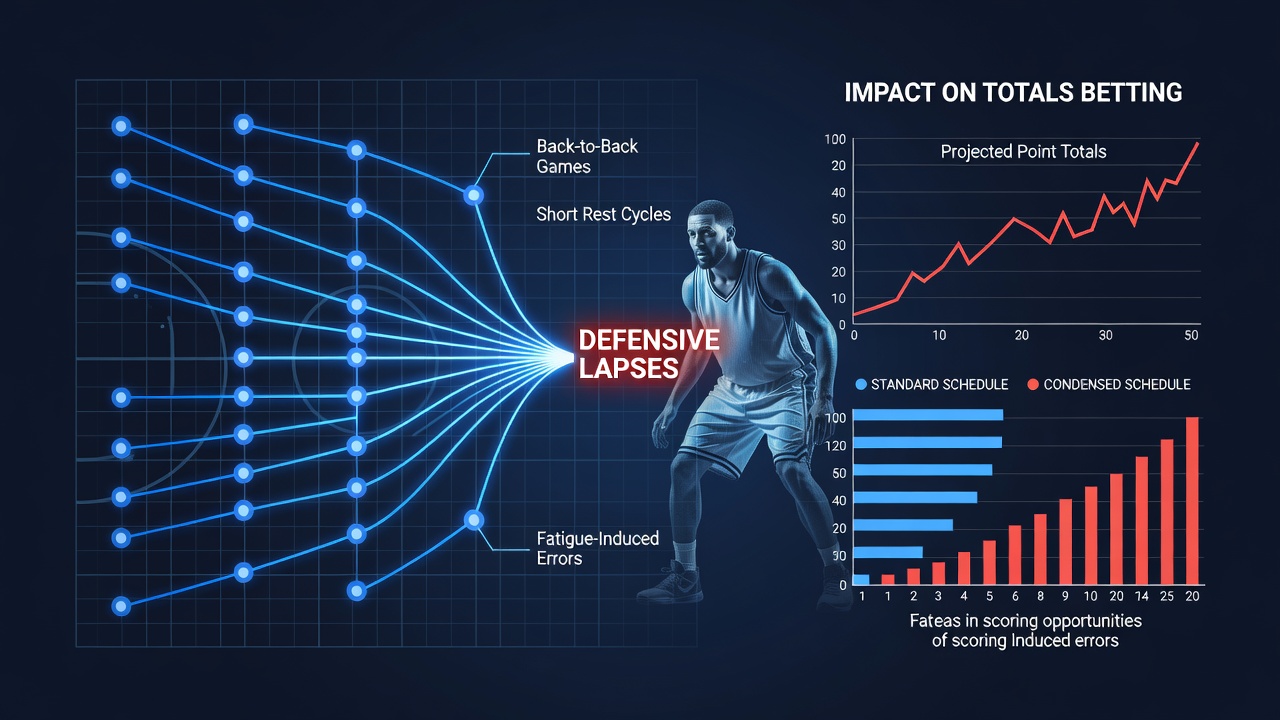
Defensive rating rises when teams play on short rest, while opponent points per game increase by an average of 4.8 points across a sample of 120 back-to-back sets collected during the 2025-26 season. Paint defense suffers first because help rotations arrive late, allowing drivers to convert at higher rates inside the restricted area. Perimeter contests also loosen as closeout distances extend by several inches on average, and three-point attempts against fatigued units rise accordingly. These shifts appear consistently in box-score aggregates released after each set of condensed games rather than in isolated matchups.
Totals Betting Adjustments and Market Response
Betting markets have incorporated schedule density into totals lines since sportsbooks began weighting rest differentials more heavily after 2023. When a team enters a game with two or fewer days of rest while its opponent enjoys three or more, the posted total moves upward by two to three points on average across major sportsbooks. Data from the 2025-26 season shows that overs hit at a 53.2 percent rate in such spot situations compared with even rest matchups, and the margin widens further when both clubs arrive on short rest. Line movement accelerates once injury reports confirm key rotation players remain available despite the compressed slate.
Industry reports from the American Gaming Association highlight how bettors increasingly cross-reference schedule grids with advanced defensive metrics before placing totals wagers, and several offshore operators now publish rest-adjusted totals models updated daily. These models flag games where combined pace projections exceed league averages because defensive lapses create transition opportunities that extend possessions and raise scoring volume.
Travel and Back-to-Back Clusters in Specific Markets
West Coast teams face the steepest travel burdens when condensed blocks include flights from Los Angeles to Boston and back within five days, and historical tracking shows elevated totals in those return games. Eastern Conference clubs encounter similar patterns during January road trips that string together four cities in eight nights. League data released through the NBA Players Association indicates that player availability dips slightly in the immediate follow-up games, which further tilts scoring upward because bench units often allow more open looks.
One stretch in mid-February 2026 produced six overs in seven games involving teams coming off back-to-backs, and the pattern repeated in early April when playoff seeding races compressed remaining schedules. Totals bettors who monitor daily rest reports alongside defensive rating trends have documented consistent edges in these windows without relying on subjective fatigue narratives.
Conclusion
Condensed schedules create measurable defensive inefficiencies that totals markets have priced into lines across the 2025-26 season and into the June 2026 postseason window. Data from league tracking systems and rest-adjusted models show elevated combined scoring when teams face repeated short-rest scenarios, and market operators continue to adjust totals accordingly. Bettors who integrate schedule density with defensive metrics encounter repeatable patterns rather than isolated anomalies.