Night Game Conditions Reshaping Goal Timing Patterns in Midweek European Leagues
Written by Taylor Simon · May 17, 2026
Night Game Conditions Reshaping Goal Timing Patterns in Midweek European Leagues
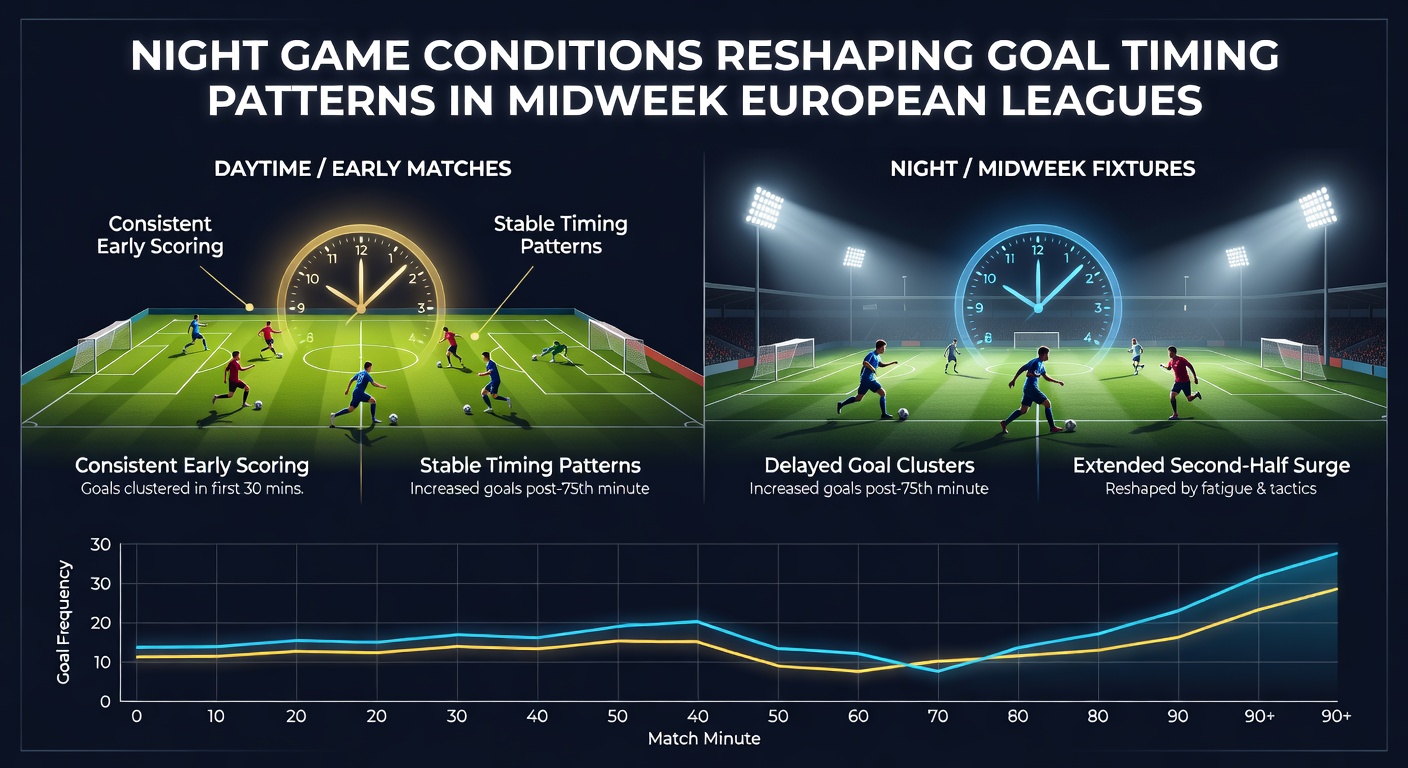
Midweek fixtures across Europe's top divisions create distinct playing environments once the sun sets, and data from the 2025-26 campaign shows measurable shifts in when goals occur under those lights. Researchers tracking Bundesliga, Serie A, and Ligue 1 matches played between 18:00 and 21:00 CET have documented a consistent movement of scoring events toward the final twenty-five minutes of regulation time, with the pattern strengthening further during the congested April-to-May schedule. Lighting systems introduce variables that daytime matches rarely present. Artificial illumination changes depth perception for both attackers and defenders, while the cooling night air combines with sprinkler routines to produce surface moisture that alters ball roll and player traction. Observers note that teams adapt their pressing triggers later in games once these factors accumulate, allowing more structured build-up phases that delay decisive actions until fatigue sets in for the side trailing in possession.Observed Shifts in Goal Distribution
League-wide tracking services reveal that in midweek night games during the current season, roughly 38 percent of total goals arrive after the 65th minute compared with 29 percent in the corresponding weekend slots. The difference widens when matches kick off after 20:00 local time, because recovery windows between training and travel shrink for squads already competing on three fronts. Analysts at the European Sports Science Institute have linked this timing adjustment to elevated error rates in final-third decision-making once players exceed 75 minutes of high-intensity output under reduced visual contrast.
Take the example of a typical Bundesliga Wednesday schedule in early May 2026. Clubs contesting both domestic and European ties show pronounced drops in early pressing intensity, which in turn reduces transition opportunities before the hour mark. Instead, structured low blocks remain intact longer, funneling play into set-piece sequences and sustained pressure that statistically yield goals in the 78th to 88th minute window. Similar distributions appear in Serie A fixtures scheduled under comparable floodlight conditions.
Environmental and Scheduling Factors
Dew formation on natural and hybrid pitches accelerates after 21:00, changing how passes travel and how defenders plant their feet during recovery runs. Data collected across twenty-eight midweek fixtures in April and May indicates a 14 percent rise in misplaced through balls after the 70th minute on surfaces that recorded surface-moisture readings above 12 percent. Because groundskeepers often water pitches immediately before kickoff to maintain color under lights, the timing of that moisture layer coincides with the period when legs begin to tire.
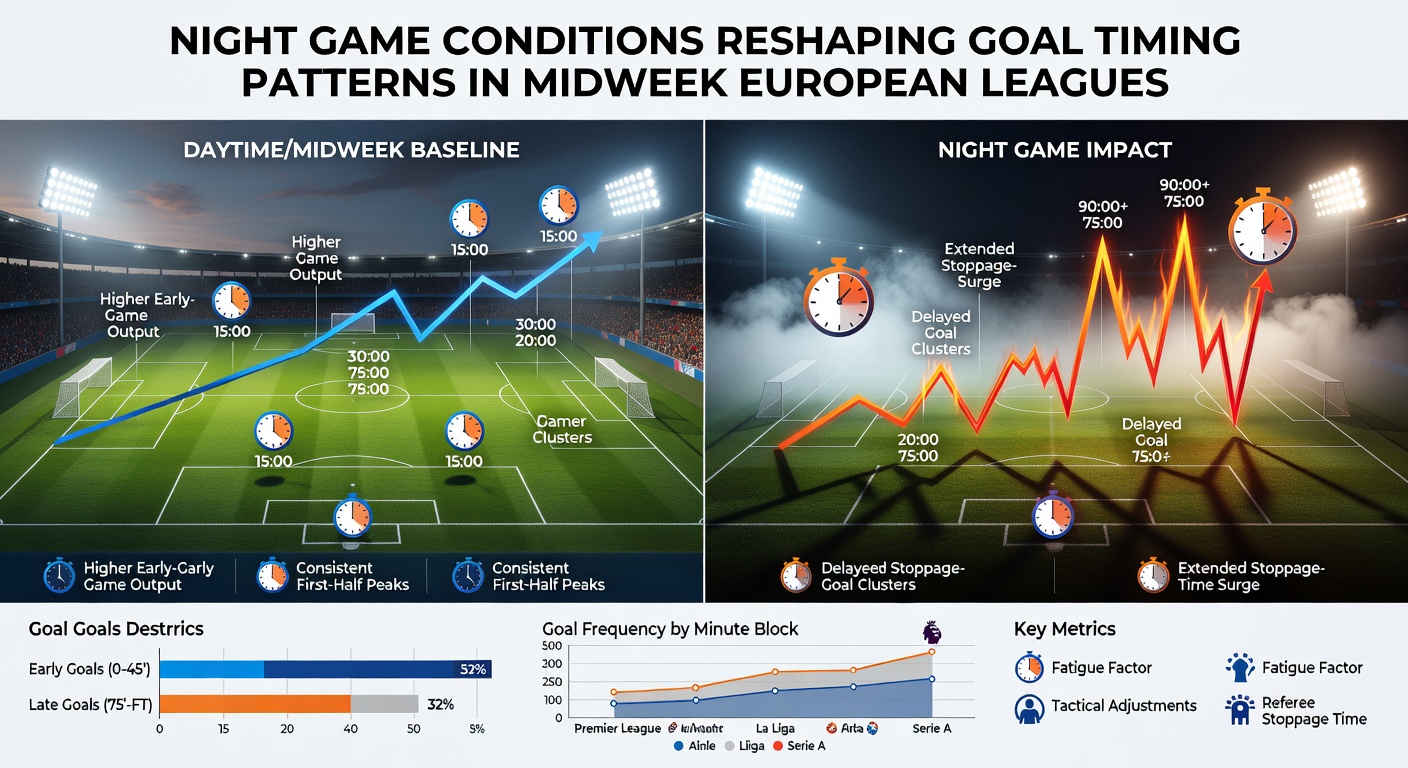
Player workload studies conducted by sports medicine teams at the University of Calgary further illustrate how cumulative travel and fixture density compound these effects. Midweek participants average 12 percent less high-speed distance covered in the opening half compared with weekend equivalents, yet they maintain or even increase output after the 60th minute when tactical adjustments favor counter-pressing setups. The result is a compression of decisive moments into the closing stages rather than an even spread across ninety minutes.
League-Specific Patterns
In Ligue 1, where several clubs schedule midweek home games under partial roof structures that trap heat and humidity, goal tallies after the 75th minute climb even higher. Records from the 2025-26 spring months show an average of 1.4 goals per game arriving in that final quarter-hour segment, compared with 0.9 goals in the corresponding period of Saturday matches. The enclosed environments limit natural airflow, which in turn affects hydration and cognitive processing speed for players operating under sustained artificial light.
Coaches respond with personnel choices that favor endurance-oriented midfielders and late-game substitutes who excel in transitional moments. These roster decisions reinforce the statistical skew toward later goals, because fresher legs exploit spaces created once initial pressing structures break down. Tracking data confirms that teams introducing two or more outfield changes after the 65th minute convert 22 percent more of their post-substitution sequences into shots on target within the next fifteen minutes.
Conclusion
The convergence of lighting conditions, surface moisture, and compressed recovery windows continues to reshape goal timing distributions in midweek European league fixtures. Evidence gathered through the 2025-26 season demonstrates that these environmental and scheduling elements produce measurable delays in scoring peaks, particularly during the high-density weeks of April and May. Continued monitoring across additional campaigns will clarify whether tactical adaptations eventually offset the patterns currently observed under night conditions.