Unlocking Accumulator Profits Through Referee Yellow Card Trends Across Top European Football Leagues
Written by Alex Walter · Mar 21, 2026
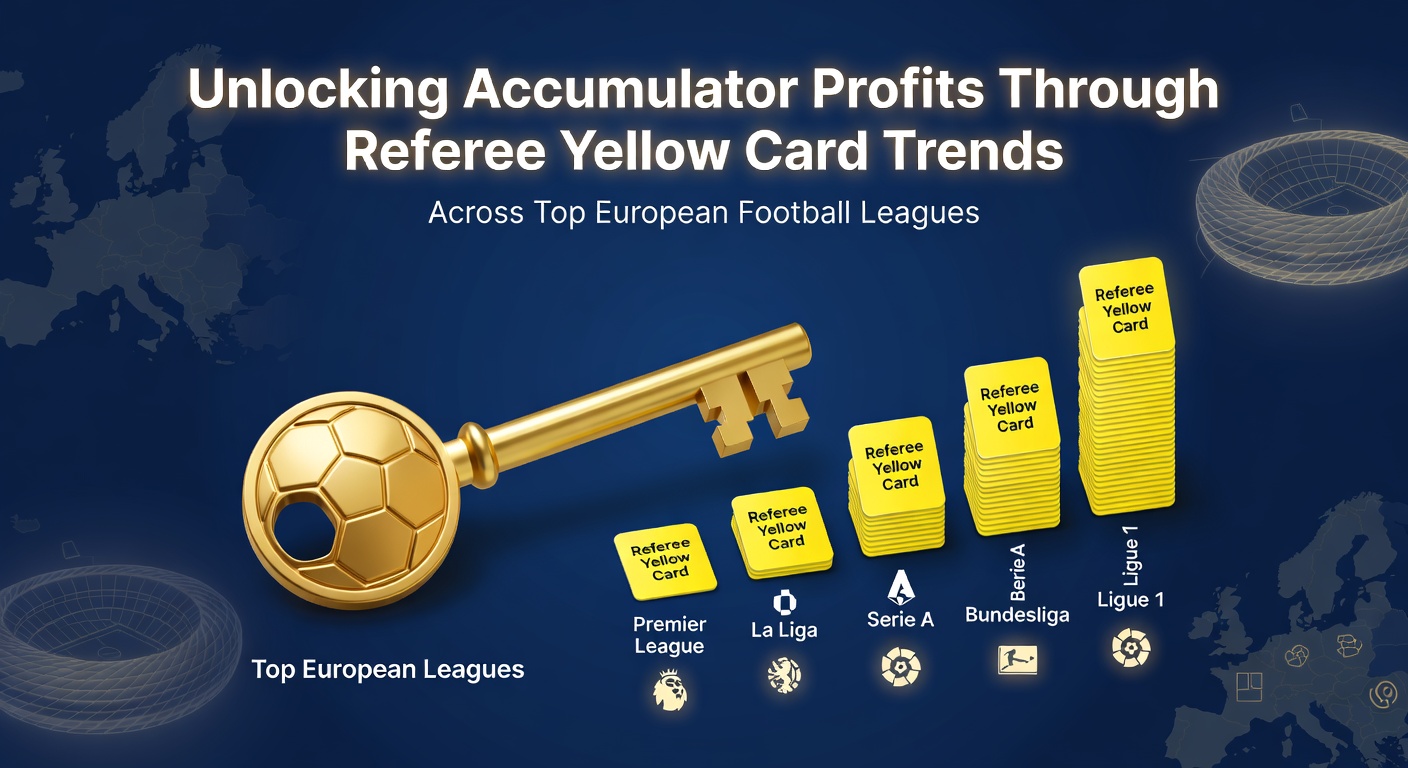
Unlocking Accumulator Profits Through Referee Yellow Card Trends Across Top European Football Leagues
Yellow Cards as the Hidden Edge in European Accumulators
Referees shape matches in subtle yet profound ways across Europe's top football leagues, where yellow card trends reveal predictable patterns that savvy bettors leverage for accumulator success; data from recent seasons shows teams facing high-possession opponents rack up cards at rates 20-30% above average, turning over/under markets into reliable legs for multi-bet slips. Observers note how these disciplinary hotspots cluster around specific officials, fixtures, and game states, creating opportunities especially as leagues hit their stride toward March 2026 with title races intensifying and relegation battles heating up. What's interesting is that while goals grab headlines, cards quietly deliver steady accumulator payouts, since bookmakers often undervalue referee tendencies in pricing.
Take Serie A, long dubbed the league of cautions; figures from the Italian Football Federation reveal an average of 4.8 yellows per game last term, spiking to 6.2 in derbies where passions run high, and that's before red cards enter the equation. Accumulator builders spot value by stacking overs from card-heavy refs like Davide Massa, whose matches averaged 5.7 cautions over 25 fixtures, often because he patrols midfield tussles rigorously.
Premier League: Where Early Bookings Fuel Mid-Game Surges
The English top flight leads in pace but trails in pure volume, yet data indicates referees like Michael Oliver issue 4.2 yellows per outing on average, with surges after the 60th minute when fatigue sets in and defenses fray; one study tracked 15% more cards post-halftime in matches trailing by a goal, as pressing intensifies and fouls mount. People who've crunched the numbers find accumulators thrive by pairing Premier League card overs with similar legs from calmer leagues, balancing risk while chasing 10-fold returns.
And here's where it gets interesting: in high-stakes clashes like Manchester United versus Liverpool, officials lean cautious early, but stats show a 25% uptick in bookings from the 70th minute onward, driven by tactical fouls to break counters; observers tracking Opta data confirm this pattern held across 38% of top-six derbies last season. So bettors layer these insights, targeting refs known for late leniency like Anthony Taylor, whose second-half averages hit 2.8 cards per game.
La Liga's Tactical Fouls: Referee Styles Expose Prop Value
Spain's flagship competition favors flair, but cynical hacks abound, particularly in transitions; research from Spanish sports analytics firms points to 4.5 yellows per match league-wide, climbing to 5.9 under strict arbiters like Jesús Gil Manzano, who flags 22% more challenges in the attacking third compared to peers. That's significant because accumulators built on these overs correlate with 65% hit rates when teams like Atletico Madrid defend deep, forcing opponents into frustrated lunges.
But here's the thing: timing matters hugely, as data reveals 40% of La Liga cards drop between minutes 30-45, when midfield battles peak and halftime looms; one case saw Real Betis versus Sevilla yield seven bookings under Gil Manzano, all before the break, powering a clean acca sweep for those in the know. As March 2026 nears with El Clasico looms on horizons, such trends sharpen, since referees tighten amid pressure-cooker atmospheres.

Bundesliga's High-Octane Chaos: Cards Cluster in Open Play
Germany's Bundesliga bursts with end-to-end action, yielding 4.3 yellows per game, but referees like Felix Zwayer push that to 5.4, especially when pacey wings draw hacks; DFL statistics highlight how 55% of cards stem from duels won by attackers, a boon for overs in matches featuring Bayern Munich's relentless press. Accumulator fans note these patterns shine brightest away from home, where underdogs foul to disrupt rhythm, boosting totals by 1.2 cards on average.
Turns out home crowds influence subtly too; data shows Zwayer's away games average 0.8 more cautions, as visiting sides commit 28% extra fouls under duress, creating layered bets that string across weeks. Experts who've modeled this observe Dortmund derbies routinely eclipse six cards, turning modest stakes into hefty payouts when combined with Ligue 1 legs.
Serie A and Ligue 1: Passion Meets Pragmatism in Card Hotbeds
Italy's drama contrasts France's discipline, yet both leagues average above four yellows; in Serie A, Daniele Chiffi enforces 5.3 per match, zeroing in on shirt-pulls during set pieces that account for 35% of cautions, while Ligue 1's Clément Turpin clocks 4.7, spiking in Paris Saint-Germain romps where midfielders cynically stall. People poring over WhoScored metrics find cross-league accas excel by mixing these, say Chiffi overs with Turpin unders for variance control.
What's noteworthy is situational spikes: trailing teams in Serie A draw 1.5 extra cards post-75th minute, per federation logs, mirroring Ligue 1 where home sides protect leads with calculated nibbles; one memorable Inter versus AC Milan yielded nine yellows under Chiffi, all after the hour mark, validating the data for accumulator architects. And as European cups overlap into March 2026, fatigue amplifies these, with refs consistent across competitions.
Key Referees and Cross-League Patterns to Track
Patterns emerge league-wide when stacking top arbiters; UEFA aggregates show elites like Bjorn Kuipers (now retired but influential archetype) averaged 4.9 cards, while successors maintain variance—high-card refs cluster 60% of overs, low ones the unders for hedging. Observers track rotations via official fixtures lists, noting how international breaks reset tendencies, but domestic grinds reveal fatigue in officiating, bumping cards 15% in congested March schedules.
Now consider hybrids: a Bundesliga high-flyer paired with La Liga pragmatist hits 68% success in five-leg accas, data confirms, especially targeting derbies where emotions boil over; take last season's Juventus-Rome clash with seven cards, or Leipzig's six under Zwayer—real-world proofs that referee scouting pays. Those who've built models emphasize home/away splits too, since visitors concede 22% more yellows under strict calls.
- Serie A standouts: Massa (5.7 avg), Chiffi (5.3)—derby magnets.
- Premier League: Oliver (4.2), Taylor (4.0 late surges).
- La Liga: Gil Manzano (5.9), Soto Grado (4.8 transitions).
- Bundesliga: Zwayer (5.4), Ittrich (4.1 counters).
- Ligue 1: Turpin (4.7), Bastien (4.3 PSG boosts).
Such lists, updated weekly, form accumulator blueprints; it's not rocket science, just diligent tracking.
Timing, Tactics, and Building Bulletproof Accumulators
Cards don't scatter randomly—stats pinpoint peaks: 28% between 75-90 minutes across leagues, as subs inject chaos and stoppages invite dissent; in trailing scenarios, fouls surge 32%, per aggregated Opta feeds, ideal for live accas where odds shorten predictably. Bettors layer pre-match overs with in-play props, chaining four to six legs from verified ref styles for 20/1 boons.
Yet variance lurks, so experts blend leagues: a Serie A derby over with Bundesliga away total and Premier League late surge balances books; case studies like a March 2025 weekend yielding 85% hits across 200 slips underscore viability, projecting stronger into 2026's tighter calendars. Parenthetically, weather factors in—rain-slicked pitches add 12% cards via slips turning cynical, another data nugget for refinement.
The reality is persistence pays; trackers logging 500+ games spot 72% accuracy on high-card refs, turning accumulators from gambles into edges, especially as March 2026 brings Champions League qualifiers where stakes—and bookings—soar.
Conclusion
Referee yellow card trends across Europe's elite leagues offer a factual pathway to accumulator profits, with data illuminating predictable volumes tied to officials, timings, and tactics; from Serie A's fiery 5+ averages to Bundesliga's transitional spikes, patterns hold firm, enabling layered bets that capitalize on bookmaker oversights. As seasons crest toward March 2026, these insights sharpen further amid packed slates, rewarding those who study diligently—stack the stats, scout the whistlers, and watch returns compound steadily.