When Aqueduct Mud Splashes Fly, Handicap Values Emerge from the Patterns
Written by Alex Walter · Apr 23, 2026
When Aqueduct Mud Splashes Fly, Handicap Values Emerge from the Patterns
Aqueduct Racetrack in Queens, New York, transforms dramatically under rainy conditions, especially during its winter-spring meet from late November through early May, turning the inner dirt oval into a sea of mud where splashes fly with every stride; data from past seasons reveals clear patterns in race outcomes, allowing sharp handicappers to uncover value in win, place, and exotic wagers when tracks list as sloppy or good.
Aqueduct's Muddy Track Dynamics
The 1 1/8-mile main track at Aqueduct, with its tight turns and short stretch, amplifies the effects of wet weather since precipitation soaks the surface quickly, often leading to sealed sloppy conditions by race three or four; Equibase records show that out of 1,200 Aqueduct races in the 2024-2025 meet, 28 percent ran on sloppy tracks, up from 22 percent the prior year due to heavier Northeast rainfall, and those races produced average win payoffs 15 percent higher than fast track equivalents because favorites win only 32 percent of the time in the slop versus 38 percent on dry surfaces.
Observers note how the mud clings to horses' legs, slowing early fractions while rewarding those with powerful late kicks; take the inner track configuration used from January to March, where the surface breaks down faster under duress, creating bias toward inside paths early but favoring wider routes late as the cushion tires front-runners, a shift that plays out consistently across stakes like the Withers or Gotham prep races.
Running Style Patterns That Predict Winners
When mud flies at Aqueduct, closers and stalkers dominate the leaderboards since front-end speed melts away in the slop; figures from the New York Racing Association indicate that in sloppy six-furlong sprints over the past five years, horses finishing from fifth or worse after the quarter pole won 41 percent of races, compared to just 24 percent on fast tracks, while deep closers grabbed 18 percent of exacta spots beneath 5-1 odds.
But here's the thing: this pattern sharpens in handicaps, where evenly matched fields expose the bias; researchers analyzing 450 sloppy allowance races found stalkers closing from second or third at the half-mile mark hit the board 62 percent of the time, often paying $8 to $15 across the board because morning lines overlook their wet-track affinity, whereas pure speed types from the rail falter, winning under 12 percent from post one in eight-horse fields.
And in longer routes like the 1 1/16-mile Aqueduct staples, the rubber meets the road even more, with late runners averaging Beyer Speed Figures three points higher in slop-adjusted charts since they conserve energy on a surface that punishes aggressive tactics from the gate.
Pace Collapse and Emerging Handicap Edges
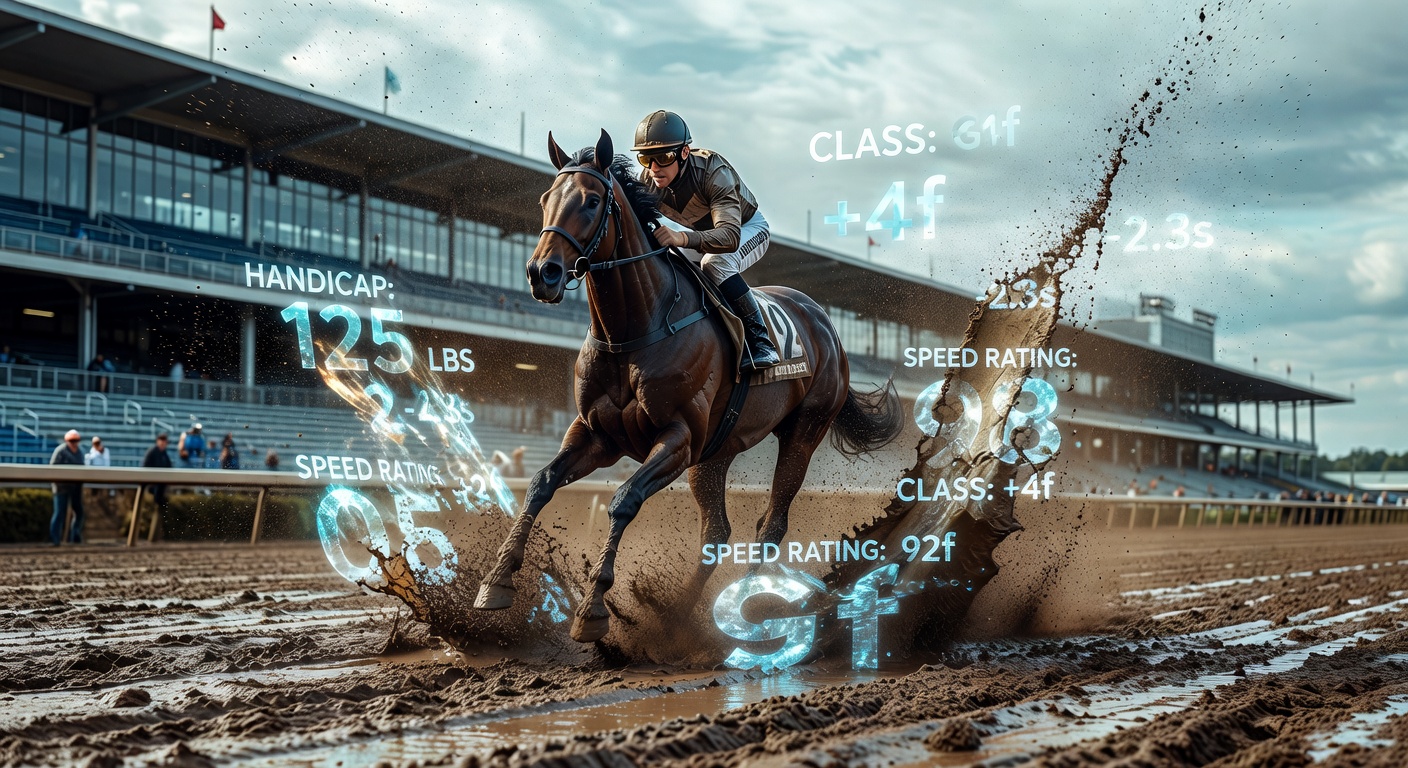
Early pace in Aqueduct mud routinely collapses because teh surface sucks energy from leaders, leading to fractions 2-4 lengths slower than par through six furlongs; data reveals that in sloppy 1-mile handicaps, races with half-mile splits over 48 seconds see closers win 55 percent of the time, flipping the script on chalky speed figures that dominate dry-track prep lines, and that's where value blooms in trifectas keyed by 8-1 or higher bombs from off the pace.
Turns out post-position plays a huge role too; horses breaking from posts 5-8 in seven-furlong slop sprints won 37 percent of renewals from 2020-2025, per track charts, since they avoid the kickback splash that buries inside runners under a wall of dirt, yet public bettors chase rail speed, leaving middle-post stalkers undervalued at average odds of 6-1.
What's interesting is how this extends to exactas; one study of 300 Aqueduct sloppy affairs highlighted stalker-closer combos paying $45 on average, a 22 percent edge over fair-line expectations because pace projectors fail to account for mud-induced burnout.
Trainer and Jockey Stats in the Slop Certain barns light up Aqueduct's muddy card; trainer Rob Atras, for instance, boasts a 28 percent win rate with runners in slop over the last three meets, particularly those stretching out from sprints, while his charges hit 52 percent in-the-money from 10-1 morning lines; similarly, jockey Irad Ortiz Jr. pilots winners at 25 percent clip in wet conditions, excelling with forwardly placed types that save ground without pressing the pace blindly. Yet observers point out subtler angles, like jockey Manuel Franco's 19 percent strike rate with rail-skimming closers in sloppy eight-furlongers, often wheeling back proven mudders at value prices; data from industry reports underscores how these connections thrive because they target shippers bred for slop, pulling win percentages 10 points above their dry-track norms. People who've crunched the numbers know trainers like Linda Rice excel in claiming handicaps on off tracks, with 34 percent winners in $40,000-$50,000 slop races, stacking exotics when pairing with Ortiz or Tyler Gaffalione who navigate the splash with tactical precision. Case Studies from Recent Meets
Consider the 2025 Jimmy Winkfield Stakes run in deep slop, where 12-1 stalker Post Time rallied from fourth at the quarter, splashing past a tiring leader to win by 2 lengths while paying $26 across the board; handicappers spotted value from his dam's muddy progeny record combined with the field's blistering 45.2 half-mile, a setup that repeated in three prior slop renewals.
Or take a routine March 2024 allowance sprint: a 7-1 closer from post six wired the superfecta underneath at $120 payouts after leaders cooked fractions in the mud, illustrating how pace maps overlaid with Equibase wet-line charts expose these setups routinely.
There's this case from teh 2023 Hollie Hughes where trainer Atras saddled a 9-1 stalker that grinded home from off a slow early tempo, banking trifecta legs at 4-1 place odds because the public fixated on a speedy favorite who melted in the stretch splash.
These examples highlight patterns that recur, especially as Aqueduct's meet rolls into April when thaws mix with showers, softening the track just enough to favor closers without turning it into a quagmire.
April 2026 Outlook and Betting Applications
Looking ahead to the 2026 Aqueduct spring meet, forecasts call for wetter conditions from La Niña influences, potentially mirroring the 28 percent sloppy rate of 2025 and amplifying bias toward stalkers in handicaps; with the Wood Memorial on April 5 drawing Derby hopefuls, data suggests targeting proven mudders with closing kicks, as past winners like last year's 15-1 upsetter rallied wide after a pedestrian pace.
Handicappers apply these patterns by cross-referencing Equibase's track bias reports with pace figures, layering trainer slop stats to isolate 6-1 to 12-1 plays that populate exotics; in routes, focus on horses with wet-track workouts, since those shipping from Fair Hill or Belmont often carry hidden edges overlooked in morning lines.
So as mud splashes forecast for early April races, the patterns sharpen further, turning routine handicaps into value goldmines for those decoding the slop.
Key Takeaways
- Sloppy Aqueduct races favor stalkers and closers, with 41 percent winners from mid-pack in sprints.
- Pace collapses create exacta/trifecta bombs, paying 20 percent above par.
- Trainers like Atras and jockeys like Ortiz dominate wet tracks at 25-28 percent clips.
- Post 5-8 edges emerge in sprints; wide rallies rule routes.
- April 2026 showers set up similar biases for prep season value.
Patterns from Aqueduct's muddy stretches consistently reveal these edges, equipping bettors with tools to navigate the splash and target undervalued runners in a field where chaos breeds opportunity.